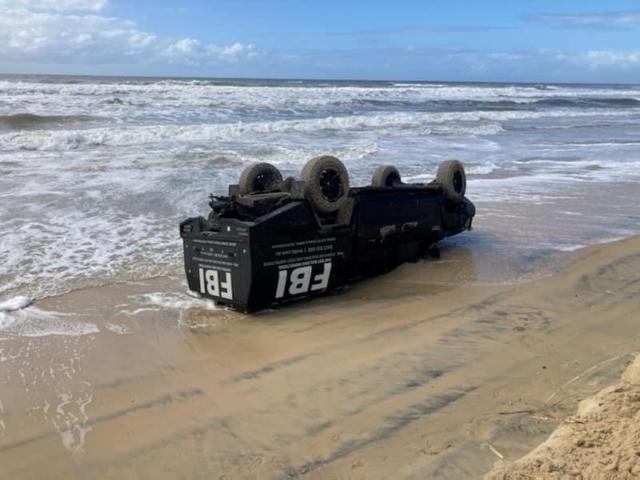
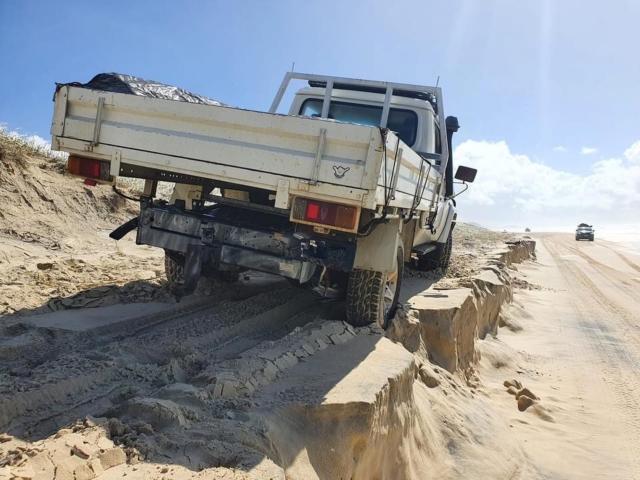
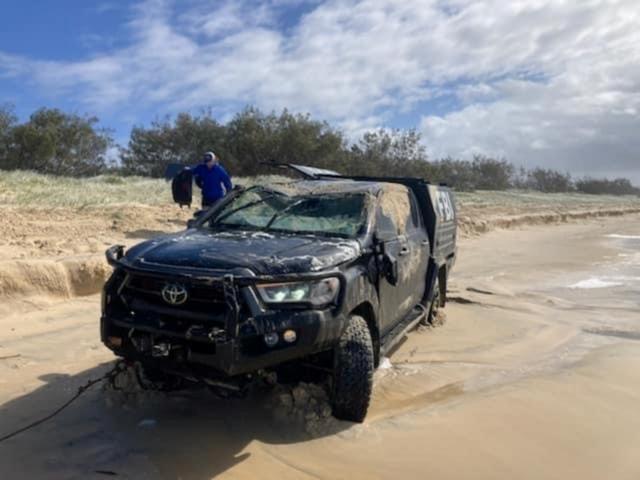
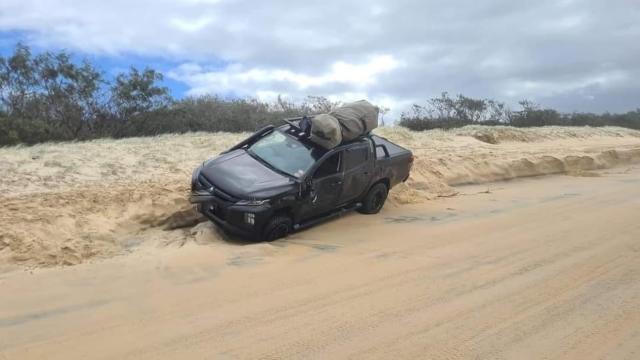
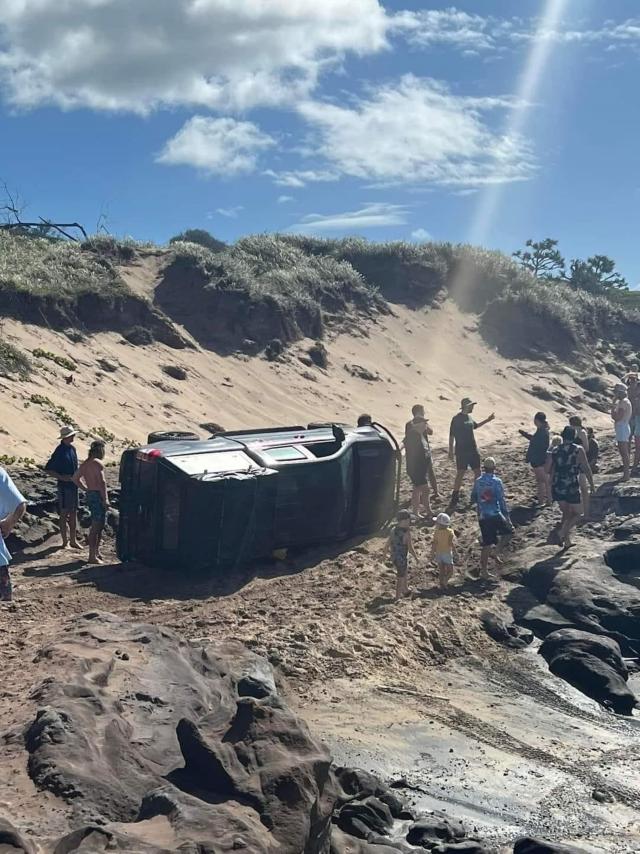
It seems no matter how much social media shaming drivers get and how much ridicule on sites like “I got bogged on Inskip Point“ where these photos were taken, drivers still choose poor driving etiquette when away from home.
These drivers chose to drive on high tide ignoring every instruction not to do so by warnings and information shared by the Department of Environment and Science (DES) and the Queensland Parks and Wildlife Service (QPWS).
The DES site has clear information on beach driving, hazards and rules for four-wheel drive owners when driving in the Cooloola National Park and K’gari (Fraser Island).
The site has a “Driving on sand safety guide” for more detailed information on rules, preparation, hazards, and other handy sand driving tips and recommend drivers read this guide before leaving home and check the current beach and track conditions.
Further instructions are listed as essential guidelines to remember when driving in Cooloola:
• Avoid travelling at night; washouts and rocks can be difficult to see.
• Always use established or formed tracks when accessing designated beach camp sites behind the foredunes.
• Use existing tracks when accessing the Teewah Beach camping area.
• Do not drive over vegetation, park vehicles, or set up camp on a vegetated foredune. Penalties apply.
• Slow down around pedestrians as approaching vehicles are difficult to hear above the sounds of surf and wind.
• Take extra care and slow down around busy meeting spots, such as Double Island Point and Teewah Beach camping area.
• Mudlo Rocks, just south of the beach ramp at Rainbow Beach, are generally impassable at high tide and often at low tide as well, depending on conditions. Use extreme caution; only experienced drivers should attempt the crossing. Conditions change daily. Always check first.
• Leisha Track northern entrance is subjected to continuing natural erosion and at times this can impede travel. The track may become totally inaccessible on or around high tide so plan to travel at or near low tide.
• Do not park on the Leisha Track.
As well as the hazards mentioned in the safety guide the guide advises changes can occur daily, so it is important to check the website for update
• Deep washouts can happen at any time, particularly after heavy rain and rough seas.
• Wave action can expose dangerous rocks overnight, including Mudlo Rocks.
• Debris, such as tree trunks and coffee rock, is often exposed in the intertidal zone— between high and low tide marks—following severe weather events.
The DES also advised the other significant reason not to drive on the dunes is to protect Endangered marine turtles who use this beach as a nesting and hatching site.
The rules to respect if you wish to visit the Cooloola Coast are to drive slowly on the beach and avoid driving over nests.
• Keep to the wet sand below the high tide mark to avoid making wheel ruts that may hinder the movement of hatchlings.
• Never drive or park on the dunes and use established tracks to access campsites.
• During breeding season avoid driving on the beach at night and using bright lights between 6pm and 6am.
Fines may apply to visitors disturbing turtle hatchlings or turtle nests.
For more information read the information here before you take your four-wheel drive on the beach visit: parks.des.qld.gov.au/parks/cooloola/visiting-safely